Every now and then, I find a book that helps me exorcise a minor demon. Not just experience the joys of catharsis, a release of emotions, maybe a tear or two. No – I mean “grab that compulsive thought that’s been sabotaging me for years and banish it from my brain” kind of novel. Today, I want to recommend two books which achieved just that.
The 2000s were a particularly cruel time to be a teenage girl. We were surrounded by headlines viciously mocking young pop-stars for putting on any amount of weight, Bridget Jones was considered “fat” at 61kg, and we were all learning that hating your body was a normal part of being a woman. Let’s take the holiday classic Love Actually – it’s November, so mandatory annual rewatch in many homes is starting right about now. There’s one storyline in the movie that stuck with me: Hugh Grant’s love interest, the gorgeous Natalie, constantly described as “massive” and “the chubby girl,” explains how she got broken up with because “nobody wants a girlfriend with thighs the size of tree trunks.”
This line of dialogue has been haunting me for 20 years; Natalie’s happy ending in the movie, Bridget’s romance with Mark Darcy, or validation I got from men in my own life would only afford me a temporary respite from the obsessive thought planted in my soft teenage brain: “Am I slim enough? Am I doing this right? Am I being good?” I’ve been taught to distrust my body and take other people’s judgement as fact. In the words of authors of Women’s Conflicts about Eating and Sexuality (1992): “the good girl constantly watches herself, constantly fears making a mistake (…) for her love and approval depend on being ‘good’.”
“Good” as in “virtuous” – thinness is not just an aesthetic requirement for women, but also a moral one. Striving for the standard is the only righteous choice and the punishment for non-compliance is mockery and ostracism. Kate Manne, a contemporary Australian philosopher, notes in her 2025 book Unshrinking how humans, in our need to separate ourselves from non-human animals, built into our religions and social structures various restrictions and rules that prove we are at the top of the existential hierarchy. We tried to convince ourselves so hard that we can tame our basic impulses that we decided that deprivation is a proof of virtue and following our needs is a sign of weakness and poor moral judgement. Adding to that the long-established idea that women are “weak-willed” and “unable to control their emotions” and we end up with the obsession with female thinness.
“You’re not fat, why are you even worrying about it,” unhelpfully suggests my brain. Well, Manne writes that, once a certain volume of body fat becomes a valid object of criticism in a society, suddenly all “bodies are liable to be moralized, even though we have committed no misdeeds.” A judgment of one kind of body gives misogyny a way in, a helpful tool to create a hierarchy of people and lock us into a state where we police ourselves and become the guards in the prison of our own oppressive lifestyle. Some will comply, some with gnaw at the iron bars of their enclosure and rage against it. Which way will lead to a happy ending? Two novels from very different cultures helped me articulate the answer.
A meal as an act of submission
I reached for Butter earlier this year, drawn to the vibrant cover, knowing nothing of the plot. Published in Japan in 2017, Butter takes inspiration from a real-life criminal case and centers around a journalist, Rika, working on a profile of Kajii, a caustic woman accused of defrauding and murdering multiple men.
When we’re introduced to Rika, she’s very slim, but also lonely, physically and emotionally deprived. Everything about her is austere and cold. She’s angular, androgynous; her apartment, ascetic; her relationships lack commitment and depth; she’s dedicated to her professional success and wants to be taken seriously as a journalist in a society where women are often relegated to office support roles or part-time jobs, and where 60% of women still leave the workforce at the time of their first childbirth. She knows she’s judged on her appearance, but tries to shrink herself to a point where it becomes unimportant.
It feels odd that Rika’s best friend, Reiko, dreams of being the perfect housewife. She is all the things Rika is not: a great cook, a charming hostess, a devoted wife. Having quit her job, she’s readying herself to get pregnant, become a parent, and join the daily ritual of preparing obentō, elaborate lunchboxes, judged by their nutritional and aesthetic quality, expected of the mother and emphasized by society. Very soon, however, that smooth facade begins to crack and hidden neurosis and desperation begin to show. Both women are realizing they are uncomfortable and unfulfilled, having suppressed their own needs for far too long. Meeting Kajii is a life changing moment for them.
Imprisoned and accused of murder, remorseless Kajii finds Rika to be an easy target and a source of entertainment. She start sending the journalist on culinary quests, a challenge Rika eagerly accepts, with the hopes of writing a compelling profile. As a subject, Kaji is mysterious and contradictory, both transgressive and surprisingly conservative in her views and actions. She rejects the modesty expected of the ideal Japanese woman. She’s entertained a string of lovers; enjoyed rich and elaborate dishes; her body is soft as dough and her tongue sharp as a knife. But, at the same time, through her culinary blog and, later, from her prison cell, she preaches that women should dedicate themselves to loving and taking care of men. She hates two things in life with a passion and they are “feminists and margarine.” Her hedonism feels less like an expression of individual freedom and more like a shield, while her prejudice and standards of perfection create yet another unattainable ideal in which she herself is trapped.
For a greater part of the novel, the act of eating in Butter is rarely a spontaneous and joyful experience. It’s a result of following instructions, fulfilling expectations, a means to an end, or an opportunity to be judged and criticized. Rika’s culinary experiences eventually lead her to life-changing discoveries, but at the start of her journey she is still very much an obedient follower and not a truly self-actualized person – and so are many of the novel’s characters. The true villain of the story, as we discover, is not the detained murderous manipulator, but Japan’s deep-rooted patriarchal norms and internalized misogyny, depriving everyone of true pleasure and connection. One of the characters describes the status quo as a state akin to death:
The quickest way for a modern Japanese woman to gain the love of a man is to become corpse-like. The kind of men who want these women are dead themselves. (p. 301)
A meal as an act of dominance
The men are definitely dead in A Certain Hunger. Dead, seasoned, seared, and consumed. Chelsea G. Summers’ debut novel shares a lot of similarities with Butter in its treatment of female appetite and critique of stifling gender norms, but it is a confession of a literal man-eater, grotesque in its violence. The table of contents, with chapters titled “Truffles” or “Torta ai Fichi e Limone” would make you believe you’re diving into an eclectic cookbook or one of those glossy food and dining magazines you’ll see in hotel lobbies. Food lovers will enjoy the evocative language and sensual descriptions of refined dishes, but make no mistake: this book is full of explicit scenes that might turn your stomach.
The main character, Dorothy, is by her own admission a monster, a psychopath, a female Hannibal Lecter if you will, but there is also a lot that the reader can admire about her. She is a mature woman, elegant and refined; ambitious, driven, and empowered, physically dominant, statuesque; always prioritizes her own pleasure – whether she’s hungry for food or for sex, she gets what she wants. She’s not maternal or nurturing, but cold and calculating. When Dorothy cooks for others, it is rarely an act of service, as she is skilled in the art of using the appetites of men to her advantage. Behind her expensive clothes and refined palate there’s the rage of a wild animal which shall not be tamed:
Unfettered violence, anger unleashed, the will to destroy, the need to undo – these acts run counter to everything we like to think we know about feminine nature. Yet women weren’t always the angels in the house, and angels weren’t always benevolent beings playing harps on the tops of trees. We like to forget that men imprisoned women in the house and expected gratitude in return. (p. 244)
Dorothy is intelligent, in control, establishing her dominance over the men in her life, but she is not as invulnerable as she seems at first. Without sharing too much about the circumstances of her lovers’ deaths, she describes the act of cannibalizing them as “solidification of self.” She reflects: “[these men] I couldn’t live without, and now I don’t have to. I am all of them; they are some of me.” It’s the ultimate solution to the fear of rejection and dissolving into obscurity. That way, male adoration is preserved, like a fly in amber, and will never wane.
A meal as self-discovery
At the end of their respective stories, Kajii and Dorothy are convicted and imprisoned for life – and every prison meal is a painful reminder of the freedoms they’d lost. If we focus on the surface layer of the text, justice has been served and the murderous, manipulative women got what they deserved. However, if we look a little deeper, the two characters have been in a prison they could not escape for years prior to their arrests. Kajii, lonely and inadequate, could not find it in herself to fit in with other women, even when she tried bonding with them over shared passion for cooking. Dorothy’s worst crime and what gets her caught in the end is turning on her only female friend, the one person who was there to love and support her.
What of the other women? Emma, Dorothy’s agoraphobic best friend, has secured her legacy as a respected artist. She remains true to herself and builds a world in which she can exist away from the system that devalues and disrespects women as they age. Reiko re-centers her own needs and rebuilds her family on her own terms. Rika, first guided by Kajii and later her own rediscovered appetite, experiences new sensations and flavors, simultaneously embracing additional kilograms and shedding the weight of other people’s expectations. Food becomes a tool of self-discovery and a way to self-actualization, but not a goal in and of itself.
Eventually, the whole experience provides her with an incredibly clear view of her life:
The more I come to know about all the different flavors out there, the softer I seem to become on myself. I don’t really mind any more if people call me lazy or fat. I feel like I’m just going to keep going until I’m satisfied. I still feel a long way to fully understanding what the right amount is for me. (p. 188)
And that is the message of both books. Neither rejection nor embracing food (and/or men) can give us fulfillment, joy, a happy ending. Some people respond to the unfair system (patriarchy) by fighting even harder to conform and achieve success within its confines, others fight to dismantle it. But it is deeply radical to try to find your sense of self-worth independent of that external system entirely. A happy ending in both novels is awarded to those women who successfully rejected the rulebook and renegotiated their place in the world, instead of surrendering or raging against it.
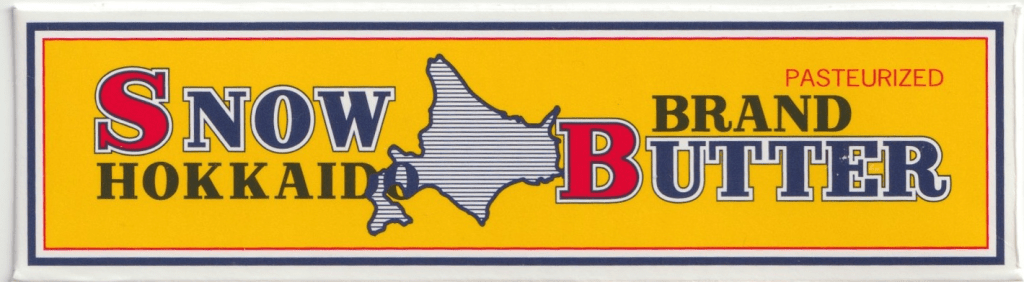
A Certain Hunger was widely praised by critics and readers. It’s definitely an easier, more digestible read if you can handle all the visceral details, more dynamic and shocking than Butter. It’s quite a shame Asako Yuzuki’s novel has been marketed as a crime story, leaving some readers confused and disappointed – they were expecting a cozy murder mystery but got a slow-paced, contemplative character study. When appreciated for what it really is, Butter is a powerful story of breaking free from external expectations, an inspiring tale of self-discovery and rebellion against suffocating social norms. I enjoyed it very much and, after reading, immediately went to the Japanese grocer and got myself a block of Hokkaido butter.

References
Manne, Kate. Unshrinking. How to Face Fatphobia. (2025)
Lukyantseva, Polina. “Feminism in Modern Japan: A Historical Review of Japanese Women’s Issues on Gender,” Journal of International Women’ s Studies: Vol. 25: Iss. 2, Article 8 (2023). Available at: https://vc.bridgew.edu/jiws/vol25/iss2/8
Allison, Anne. “Japanese Mothers and Obentōs: The Lunch-Box as Ideological State Apparatus,” Anthropological Quarterly, Vol. 64, No. 4, Gender and the State in Japan, pp. 195-208 (1991)
Moreira Vitzthum, Aitana. “Nobody’s Meat: Cannibalism as a Symbol for Female Sexuality in Contemporary Literature.” JACLR: Journal of Artistic Creation and Literary Research 11.1.6 (2023)
Alyson Miller & Emily Fuller. “I Was A Woman of Appetites, A Growling Beast”: On Subversive Female Hunger in Butter and Milk Fed, Critique: Studies in Contemporary Fiction (2025), DOI: 10.1080/00111619.2025.2566961

Butter: A Novel of Food and Murder by Asako Yuzuki
Softcover: 464 pages
Publisher (Japan): Shinchosha (2017)
Publisher (UK): 4th Estate (October 29, 2024)

A Certain Hunger by Chelsea G. Summers
Hardcover: 240 pages
Publisher: Unnamed Press (December 1, 2020)
 | on books and other things |
Leave a comment